PRICE REVIEW
1. Spodumene
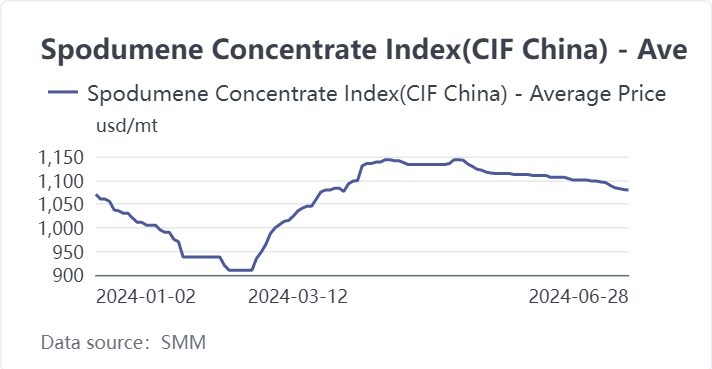
In H1 2024, the price of spodumene concentrate per ton started at $1,070 and ended at $1,079, with the highest price reaching $1,143 in April and May, and the lowest at $910 in late February. Overall, the price changes of spodumene concentrate showed a certain lag compared to the changes in lithium salt prices. In January, the change in the pricing model by overseas mines led to a decrease in the upper limit of long-term contract prices, making iron ore prices more aligned with salt prices. Together with the downward transmission of lithium salt prices, this kept ore prices relatively low in February. However, this situation did not last long, as spodumene prices began to rise in March due to the increase in lithium carbonate prices at the end of February. During this period, the rise in lithium carbonate futures on the Guangqi Exchange increased the expectations of lithium ore holders for arbitrage opportunities from the spread between spot and futures prices. This led to an increased sentiment and moves to seek OEM plants to produce lithium carbonate for hedging, resulting in a significant rise in the quoted prices for direct sales of lithium ore. The market saw a substantial increase in inquiries and a brief period of "supply shortage." As lithium salt prices rose in March and April, miners actively explored and attempted new pricing mechanisms, aiming to decouple ore prices from domestic lithium salt prices. This enthusiasm for pushing up prices led to the continuous rise and peak prices of spodumene in April and May. However, the "good times" did not last long, as lithium salt prices significantly declined in late May, followed by a decrease in long-term contract prices. In spot transactions, driven by hedging profits, the enthusiasm for purchasing remained high, and market prices, although slower to change than long-term contracts, also gradually declined.
2. Lepidolite Segment
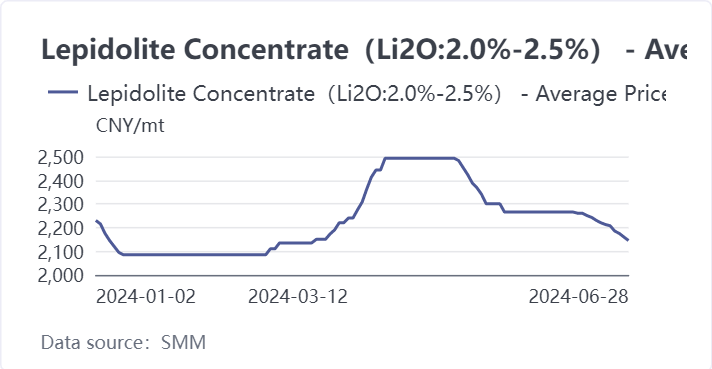
In H1 2024, the price of lepidolite concentrate started at 2,230 yuan/mt and ended at 2,145 yuan/mt. The fluctuation periods of lepidolite prices were roughly the same as those of lithium salt (lithium carbonate), occurring in February and April-May. Approaching Chinese New Year in January and February, the downstream lithium salt sector saw a significant decline in scheduled production due to the downward trend in lithium salt prices, leading to a noticeable slowdown in mining operations. Both ends of the market were weak, causing the price center to shift downward. Together with the production halts caused by central environmental protection inspections, which weakened smelter demand, the lowest price in H1 was 2,085 yuan/mt. However, as lithium salt prices rebounded in March and lithium salt producers gradually resumed operations, the increased demand led to a rise in the transaction focus of the lepidolite market. Additionally, the upward trend in lithium carbonate prices in early April heightened the sentiment of some lepidolite miners to raise prices and hold back sales, resulting in a tight spot market and an upward trend in lepidolite prices. Nevertheless, the subsequent decline in lithium carbonate prices dragged down lepidolite prices. The sentiment among mining companies to hold prices firm weakened, and some lithium salt producers, expecting a further decline in lithium carbonate prices, mainly purchased based on immediate needs with little stockpiling. The market began to show a slight oversupply, leading to a weak and downward trend in lepidolite prices.
SUPPLY AND DEMAND SITUATION
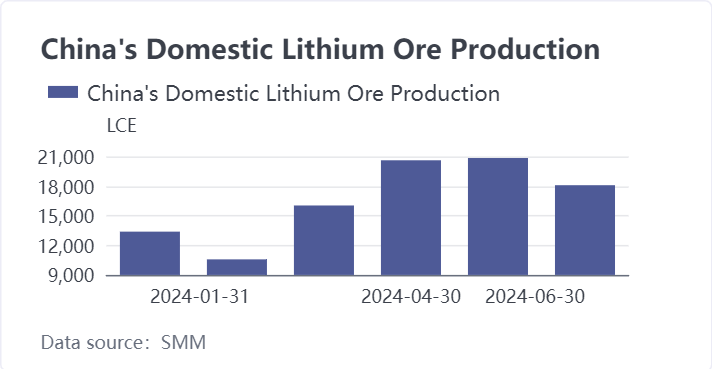
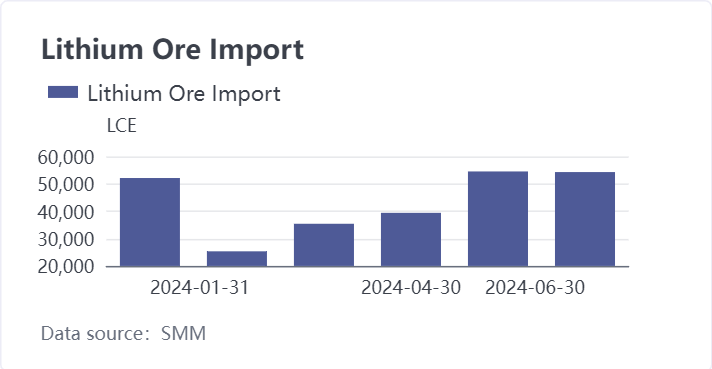
On the supply side,according to the SMM survey, China's lithium mine output in H1 2024 was 99,500 mt LCE, up 37% YoY, and imports were 257,000 mt LCE, up 27% YoY.
By raw material type:
Spodumene side, domestic spodumene production mainly came from mines in Sichuan and Xinjiang provinces. Before May, local altitude and weather conditions limited domestic spodumene production and supply. After May, with the warming weather, major production areas in Sichuan and Xinjiang resumed production to near-normal levels, though some mines saw limited production increases due to weather factors. On the import side, China's lithium concentrate imports in H1 increased compared to previous years. Currently, imported minerals are still mainly spodumene. By country, Australia and Zimbabwe remain key factors in China's lithium concentrate import market, with Nigeria's import share slightly increasing. In terms of total imports, stable imports from Australia and the ramp-up of some Chinese-funded lithium mines in Zimbabwe at the end of 2023, together with concentrated shipments to China, led to the highest monthly import volume of lithium concentrate in January 2024. The lowest volume appeared in February, mainly due to destocking by major domestic spodumene smelters at the beginning of 2024, together with the impact of the Chinese New Year holiday in February. Subsequently, with continuous port arrivals of lithium concentrate, the recovery of spodumene purchasing demand by major salt plants, and the driving force of hedging opportunities in the market, domestic demand for ore procurement surged. Additionally, the increase in spodumene from integrated projects in Africa and the rise in lithium salt deliveries driven by the recovery of lithium salt prices in March-April were the main reasons for maintaining high import volumes of lithium concentrate in the following months.
Lepidolite side, due to the Chinese New Year holiday and maintenance, production decreased earlier. After April, most mining companies in Jiangxi resumed normal production and maintained high operating rates. By June, there were some production fluctuations due to weather, costs, and mining permits.
On the demand side:
China's total demand for lithium ore in H1 was 338,000 mt LCE. Overall, most lithium salt plants using spodumene maintained stable production in H1. Some producers added new production lines, continuously ramping up production, and a few lepidolite producers switched to using spodumene to produce lithium carbonate, maintaining high demand for spodumene.
Lepidolite side, some lithium salt producers experienced losses when lithium salt prices fell. Although overall production did not significantly decrease, buyers remained cautious, primarily making short-term purchases based on immediate needs.
SUMMARY
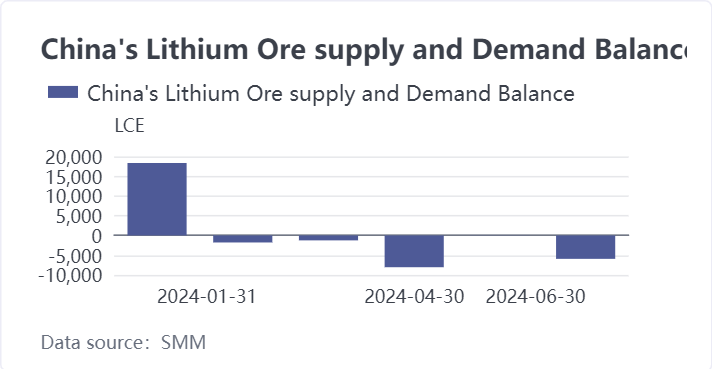
As shown in the above figure, in January 2024, due to a significant increase in imports on the supply side and sufficient ore inventory at lithium salt plants on the demand side, the willingness to purchase was weak, resulting in a temporary state where supply exceeded demand. In the following months, the supply and demand of lithium mines by producers were both strong, with a slight destocking observed.
The top five spodumene mines are all located in Australia. According to the SMM survey, the CR5 of spodumene in H1 2024 was 64.78%, with little MoM change. The leading mines hold a large market share and have strong control over prices and supply, indicating a high industry concentration.
![[Batería de litio: la unidad de baterías de litio de Ganfeng aumenta su capital registrado un 10 % hasta 3510 millones de RMB]](https://imgqn.smm.cn/usercenter/WBREf20251217171728.png)
![[SMM Resumen de la reunión matutina sobre cobalto] Los costos de las materias primas se debilitan, la demanda es lenta y el centro de precios continúa desplazándose a la baja](https://imgqn.smm.cn/usercenter/CkvAg20251217171724.jpg)